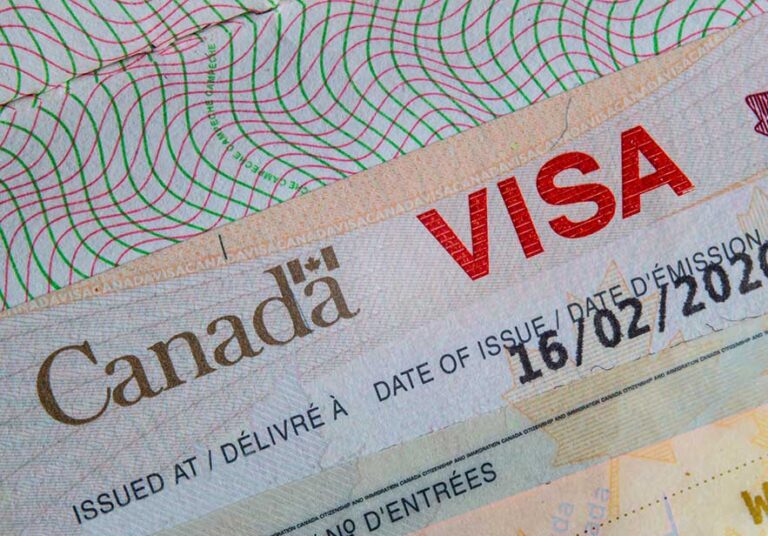
Whether driven by career opportunities, family ties, or a desire for a change of pace, thousands of United States citizens look northward across the border every year with one big question: How do I actually move to Canada?
While the two countries share a massive border and a deeply integrated economic relationship, relocating permanently requires navigating a robust and evolving federal legal framework. In 2026, Canada is holding its permanent resident targets steady at 380,000 annually, but the selection criteria have heavily shifted toward high-wage professionals and specialized in-demand industries.
If you are an American planning a cross-border move, here are the most effective legal pathways to transition smoothly from the US to Canada.
Table of Contents
Toggle1. The Express Entry System (The Flagship Economic Route)
For skilled professionals, the primary gateway to Canadian Permanent Residency (PR) is the IRCC Express Entry portal. This electronic system ranks applicants using the point-based Comprehensive Ranking System (CRS), factoring in age, education, language skills, and work history.
Major structural updates have reshaped Express Entry into a highly precise system:
- The Consolidated High-Skilled Program: Older, separate pathways (like the Federal Skilled Worker Program and Canadian Experience Class) have been modernized into a streamlined system requiring a minimum of one cumulative year of skilled work experience and strong language capability.
- The “High-Wage” Advantage: Under the current points calculator, candidates who secure an in-Canada job offer or bring Canadian experience in an occupation that pays above the national median wage receive massive bonus CRS points. High-earning tiers (such as engineers, financial analysts, and tech leads) are heavily prioritized.
- Category-Based Selection: In addition to general draws, Immigration, Refugees and Citizenship Canada (IRCC) uses targeted rounds to instantly pull candidates out of the pool if they have experience in critical shortage areas, including healthcare, STEM fields, skilled construction trades, and transport occupations.
2. Fast-Track Work Permits via the CUSMA Agreement
If you don’t yet have the points for immediate Permanent Residency but have a concrete job offer from a Canadian employer, you may not have to go through a standard, lengthy labor market test.
Under the Canada-United States-Mexico Agreement (CUSMA)—formerly known as NAFTA—US citizens can access streamlined, expedited temporary work permits.
- The CUSMA Professionals Category: This stream covers over 60 specific professions, including software engineers, management consultants, accountants, scientific researchers, and teachers.
- The Major Benefit: If your profession fits the criteria and an employer hires you, they are exempt from the tedious Labour Market Impact Assessment (LMIA) process. This allows your work permit to be processed rapidly, frequently right at a Canadian Port of Entry (the border crossing or airport). Once inside Canada on a CUSMA permit, your local experience rapidly scales up your Express Entry score for a future PR application.
3. Family Sponsorship (The Fastest Track)
If your path to Canada is built on a personal relationship rather than a professional resume, family reunification remains a primary pillar of the immigration model.
If you are married to or in a recognized common-law relationship with a Canadian citizen or a Canadian Permanent Resident, they can legally sponsor you via the IRCC Family Sponsorship Program. This pathway bypasses points systems, age caps, and job offer requirements entirely.
The sponsor simply needs to prove they can financially support your basic needs upon arrival so you do not require social assistance.
Mapping Your Timeline and Costs
Moving countries is a logistical marathon that requires both time and capital. On average, a successful immigration plan takes 6 to 12 months of documentation preparation and a clear financial runway.
Baseline Expenses to Anticipate:
- Immigration & Application Fees: Approximately $1,500 – $3,500 CAD depending on individual or family size.
- Mandatory Documentation: $300 – $500 for legal medical exams via panel physicians, alongside mandatory language tests (IELTS or CELPIP) and Educational Credential Assessments (ECA) to prove your US degree matches Canadian standards.
- Proof of Settlement Funds: If applying through economic streams without a valid job offer, individual applicants must demonstrate they possess liquid personal savings (typically starting around $14,000+ CAD) to support themselves while job hunting.
By identifying your optimal pathway early and systematically assembling your professional credentials and civil paperwork, crossing the border can shift from a complex regulatory challenge to a highly manageable, life-changing transition.